Can you use ChatGPT to write your website, or will Google penalize it?
By Capital Growth Studio · Published · 6 min read
Google judges the page, not the tool that wrote it. Your own facts and a careful check make the difference.
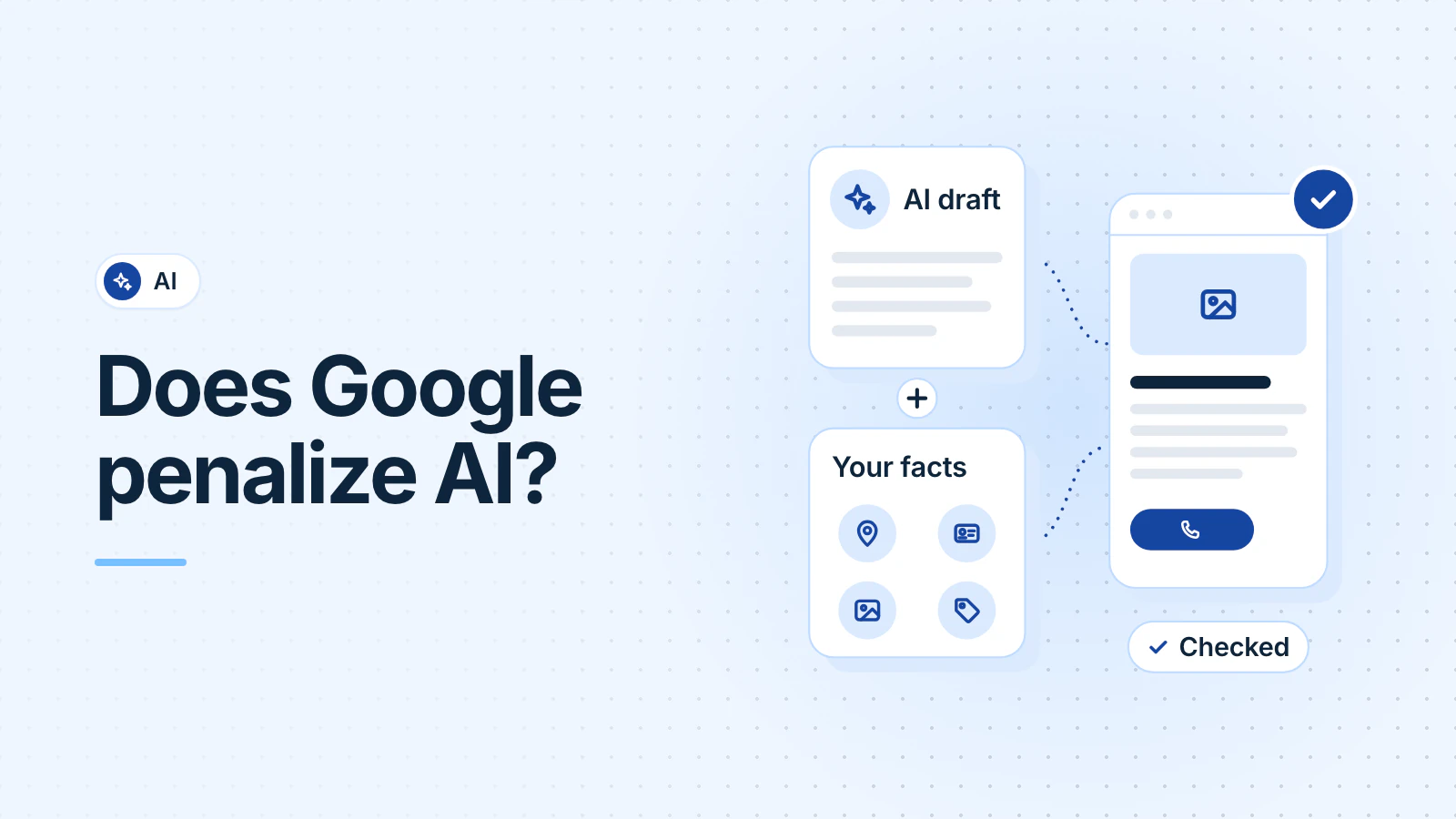
No. Google doesn't penalize a page only because AI helped write it. Its guidance says appropriate use of AI "is not against our guidelines" (Google Search Central, February 2023). Google acts against content made mainly to manipulate rankings, however it's produced. So a ChatGPT draft can work if you add your own facts and check every claim.
What does Google say about AI-written content?
Google judges the quality of content, not how it was produced. Three statements set the rules:
- February 2023: "Using AI doesn't give content any special gains. It's just content." Google's spam systems look for spam "however it is produced" (Google Search Central, February 2023).
- March 2024: Google added a spam policy against "scaled content abuse": making many pages mainly to manipulate search rankings, not to help users. It applies whether people, automation or both made the pages. Sites that break Google's spam policies "may rank lower in results or not appear in results at all" (Google Search Central, March 2024).
- October 2026: On October 1, Google updated its AI content guidance. It says AI models "don't retrieve facts" but "predict a likely sequence of words," so their output can be wrong. It calls it "critical to manually factcheck and review all AI-generated content" before you publish, including page titles, meta descriptions, structured data and image alt text (Google Search Central, October 2026).
So the risk isn't AI itself. It's pages that are wrong, generic or made in bulk to catch searches.
What are Google's "Who, How and Why" questions?
Google's guide to helpful, people-first content asks three questions about any page, whether AI helped or not (Google Search Central, October 2026):
- Who made it? Show who's behind the content, with a byline where readers expect one. Don't invent authors. Google calls AI-generated headshots, made-up names or false credentials "a form of deception."
- How was it made? If automation wrote much of a page, Google suggests saying so where readers might ask, "How was this created?"
- Why does it exist? Google calls this "perhaps the most important question." The page should help people who come to your site directly, not mainly attract search visits.
The same guide says Google's quality raters, who help it test its results, treat large amounts of AI text made "without manual oversight or curation" as "little to no effort."
Where does ChatGPT help?
Google says generative AI can be "particularly useful when researching a topic, and to add structure to original content" (Google Search Central, October 2026). For a service business, that means:
- Outlines: ask what a page about water heater replacement should cover. Then cut anything you don't offer.
- First drafts from your notes: give it your own material, like a voice memo transcript or an old brochure, and tell it to use only that.
- Rewriting for clarity: paste a paragraph you wrote and ask for shorter sentences and plainer words. Check that the meaning didn't change.
- Customer questions: ask what people want to know before they hire for work like yours. Then answer each one yourself.
Keep customer names, addresses and health details out of the chat.
What can't AI write for you?
The facts that set you apart. Google's guide to its AI search features tells site owners: "Don't just recycle what others on the internet have already said, or could easily be produced by a generative AI model" (Google Search Central, July 2026). A chat tool doesn't know:
- Your prices, or the price ranges you'll honor, and what they include.
- Your license, insurance and certification numbers. Copy them from the documents. Contractors can use our HVAC website checklist.
- Your service area: the towns and counties you drive to.
- Real photos of your team, vehicles, office and finished work.
- Real job details: the problem, the fix, how long it took and what the customer asked.
- Your hours, warranty, financing and what happens after someone calls.
The same guide calls content based on common knowledge "commodity content." A "signs you need a new water heater" page is commodity content. A page on what you find in older Silver Spring homes isn't. Real details also help when AI tools describe local businesses: see why AI tools pick your competitor.
What are the risks of AI-written pages?
| Risk | What it looks like | What to do |
|---|---|---|
| Wrong facts | An invented license number, a service you don't offer, a made-up statistic | Check every fact against your records |
| Same page as competitors | Generic tips any business could post | Add your own jobs, photos and prices |
| Mass-made city pages | Dozens of pages that only swap the town name | Make pages only for areas you serve, with real local details |
| Fake experts | An AI headshot or an invented "Dr." byline | Use real names, or your business name |
Mass-made city pages run into two spam policies. Google's spam policies list "pages targeted at specific regions or cities that funnel users to one page" as doorway abuse. They list using AI tools "to generate many pages without adding value for users" as scaled content abuse (Google spam policies, August 2026). Give an area its own page only when you have something true and local to say, such as jobs you've done there.
Health topics need extra care. For health, civic and financial information, Google says its systems "place an even greater emphasis on signals of reliability" (Google Search Central, February 2023). So medical practices and med spas should have a licensed clinician check every treatment claim.
How should you check an AI draft before you publish?
- Check every fact against your own records: prices, license numbers, hours, phone number, service area and warranty.
- Delete claims you can't back up, such as "best in DC" or a response time you don't meet.
- Add at least one thing only you could write: a real job, a photo you took or a local detail.
- Put a competitor's name on it. If the page still reads true, it's too generic.
- Check the page title, meta description, image alt text and any structured data too.
- Sign it with a real name or your business name.
- Ask why the page exists. If the answer is "to catch a search," don't publish it.
When we build your website, we write the page copy from an interview with you, and you review every page before launch.
Frequently asked questions
Can Google tell if ChatGPT wrote my page?
Google hasn't said it tries to. It judges whether a page is helpful and accurate, and its spam systems look for spam however it's made. So don't rewrite pages to pass an AI detector. Check facts and add your own details instead.
Will Google penalize the AI text already on my site?
Not for being AI text. But review it like a new draft: fix wrong facts, add your own details, and merge or remove pages that only repeat each other. Start with the pages customers see most.
Updated .