How much should a small business spend on Google Ads?
By Capital Growth Studio · Published · 6 min read
Start from the jobs you want and what each one earns. The budget follows.
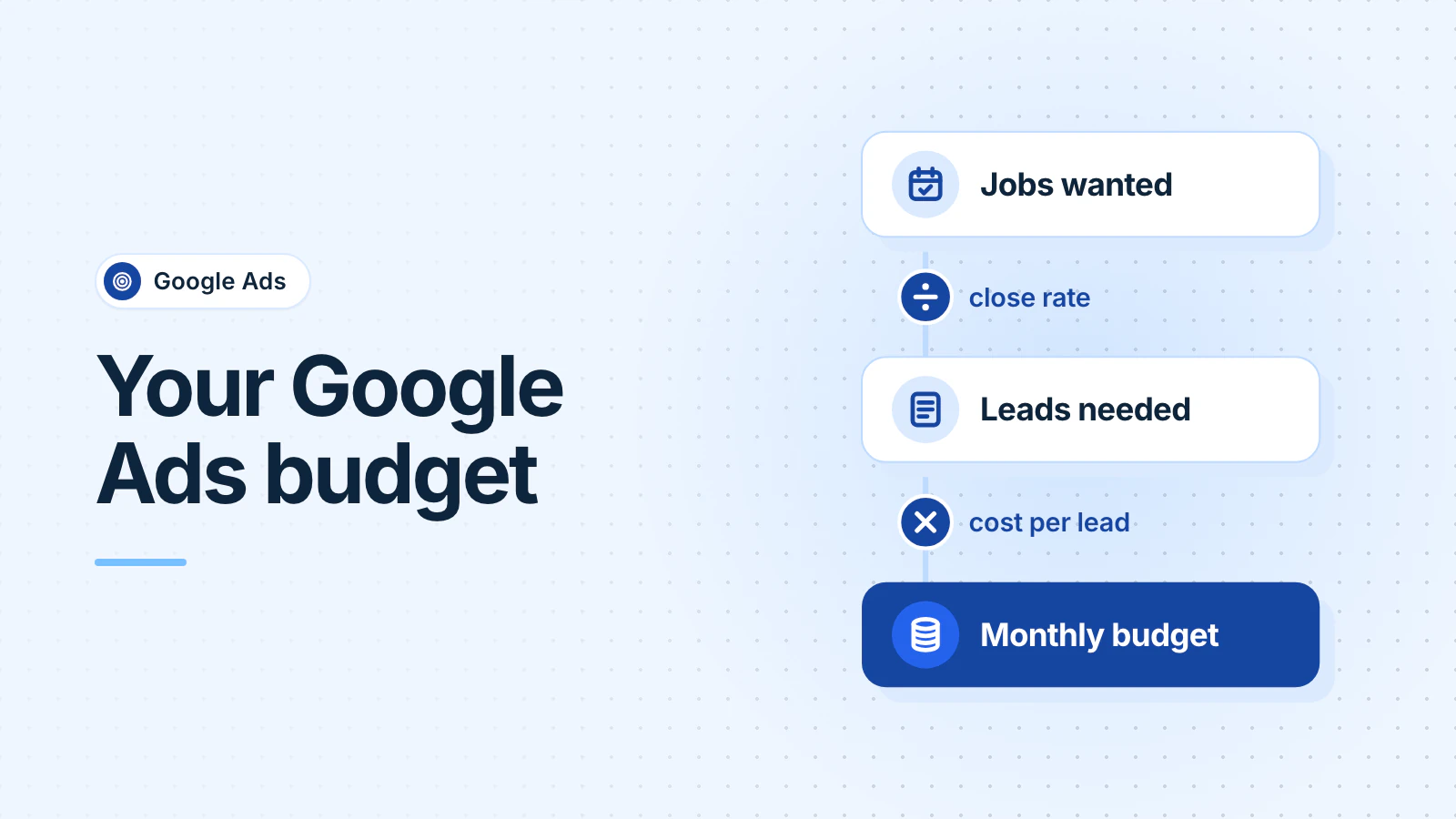
Spend what your own numbers support, not a round figure. Divide the jobs you want each month by your close rate to get the leads you need. Multiply the leads by your cost per lead for a monthly budget, then divide by 30.4 for Google's daily budget. Last, check that each job's ad cost stays below its profit.
Which four numbers do you need?
- Jobs wanted: the new jobs or customers you want from ads each month.
- Close rate: jobs won divided by leads, over your last three to six months. If you don't track it, start now.
- Cost per lead: what one call or form fill costs. Use your own history, or a benchmark (below).
- Gross profit per job: the invoice minus parts and labor, not the invoice itself.
How do you turn them into a budget?
- Leads needed = jobs wanted ÷ close rate.
- Monthly budget = leads needed × cost per lead.
- Average daily budget = monthly budget ÷ 30.4. Google uses 30.4 because it's the average number of days in a month (Google Ads Help, October 2026).
- Ad cost per job = cost per lead ÷ close rate. It must sit well below gross profit per job.
Or start from the lead price. The most you can pay per lead and still break even is gross profit per job × close rate. If leads in your trade cost more, improve how fast you answer and follow up before you spend more.
What does a lead cost in your trade?
Your own numbers are more reliable than any average. Without them, two vendor reports help. WordStream and LocaliQ are one ad company, and both reports cover its customers' campaigns on Google and Microsoft Ads:
- The 2026 benchmarks, from 13,474 US search campaigns run April 2025 to March 2026, put the median cost per lead at $66.69 for all industries and $90.92 for home and home improvement (WordStream, updated September 2026).
- The 2025 home services report, from campaigns run April 2024 to March 2025, puts air conditioning at $127.74 per lead, plumbing at $129.02 and electricians at $93.69 (LocaliQ, 2025 report).
Both are national medians. For your own towns, Google's Keyword Planner shows low and high top-of-page bid ranges, though Google says estimates are less accurate for small areas (Google Ads Help). Divide a click price by the share of visitors who call or send a form to get a lead price. Our Google Ads service starts there before we set a first budget with you.
What does the math look like for an HVAC company?
A made-up example: a heating and cooling company in Montgomery County wants 10 more booked jobs a month from ads. It books 4 of every 10 leads, an average job leaves $600 of gross profit, and it plans on LocaliQ's $127.74 per lead.
| Step | Math | Result |
|---|---|---|
| Leads needed | 10 ÷ 0.40 | 25 |
| Monthly budget | 25 × $127.74 | $3,193.50 |
| Average daily budget | $3,193.50 ÷ 30.4 | $105.05 |
| Ad cost per job | $127.74 ÷ 0.40 | $319.35 |
| Break-even cost per lead | $600 × 0.40 | $240 |
Each job leaves about $280 after ad costs, so the plan works on paper. At a 20% close rate, the ad cost per job doubles to $638.70, more than the job earns. The close rate matters as much as the click price.
How do Google's daily budget and monthly limit work?
You set an average daily budget for each campaign. Google spends more on busy days and less on slow ones, within two limits (Google Ads Help, October 2026):
- Daily: up to twice your average daily budget on any one day.
- Monthly: no more than 30.4 times your average daily budget in a calendar month. If clicks run over, Google covers the difference.
So in the example above, a $200 day isn't a billing error. Judge spending by the month, and know two details:
- An ad schedule doesn't lower the monthly limit. If ads run only on weekdays, those days can spend more, up to the daily limit.
- A change mid-month resets the pace: the rest of the month aims at the new daily budget times the days left (Google Ads Help).
What if that budget is more than you can spend?
Then narrow the campaign instead of spreading a small budget thin. A made-up example: $600 a month at WordStream's home improvement median of $8.33 a click buys about 72 clicks. At its 8.05% conversion rate, that's about 6 leads a month.
That's little for automated bidding to learn from. Google says a new bid strategy can take "up to 3 weeks or 1-2 conversion cycles" to calibrate, faster with more data (Google Ads Help). On a small budget:
- Cover fewer towns or ZIP codes.
- Advertise your one or two most profitable services.
- Run ads during the hours someone answers the phone.
- Track calls and form fills from day one.
How do Local Services Ads change the math?
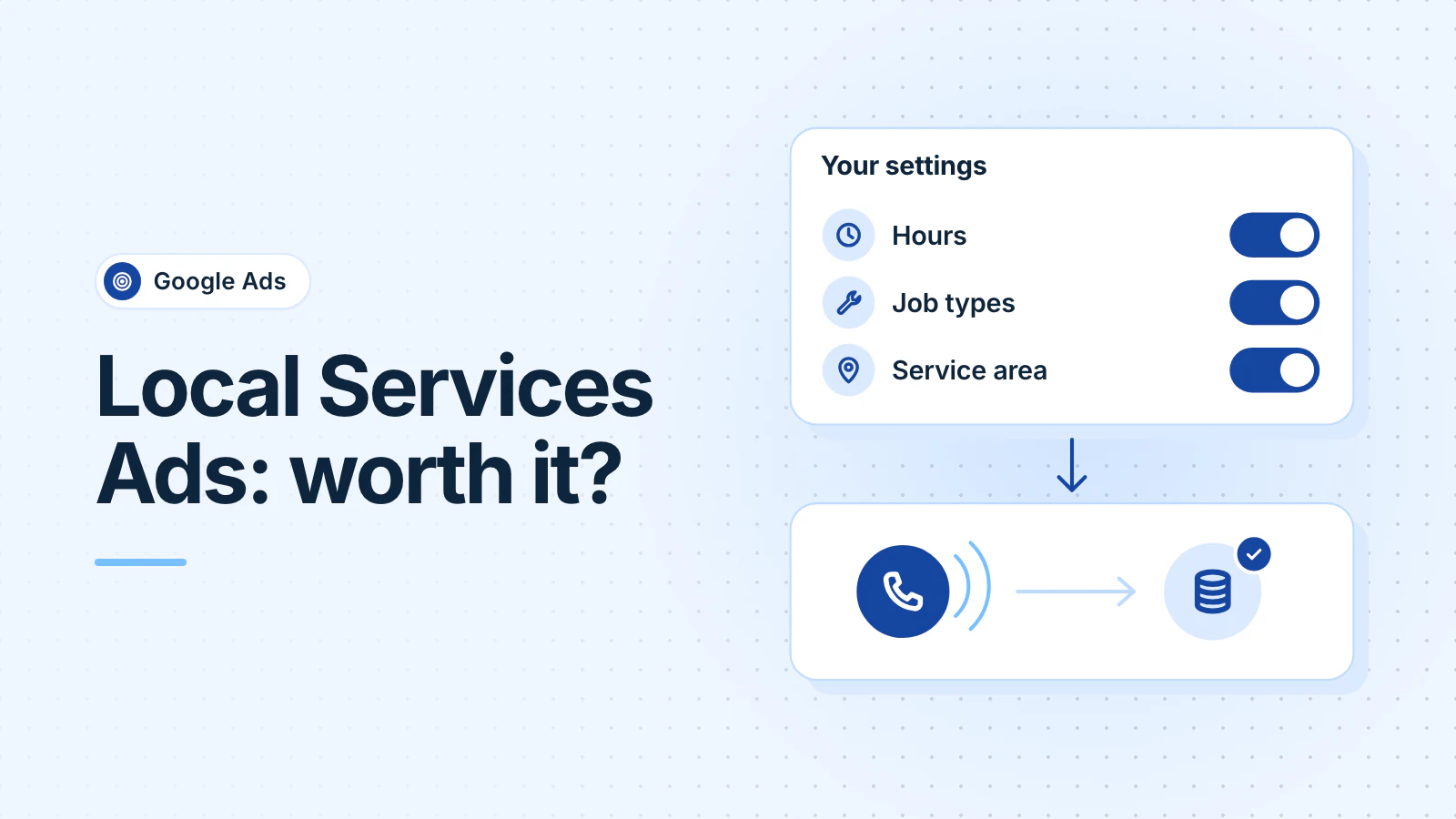
Local Services Ads charge per lead, not per click. Google says you "pay only for leads related to your business and the services you offer" (Google Local Services Help). The worksheet still works: your price per Local Services lead becomes the cost per lead, and your close rate decides whether it pays. Our guide explains when Local Services Ads are worth it.
What changed in 2026 with AI Max and AI Overviews?
Two changes affect where the money goes (checked October 13, 2026):
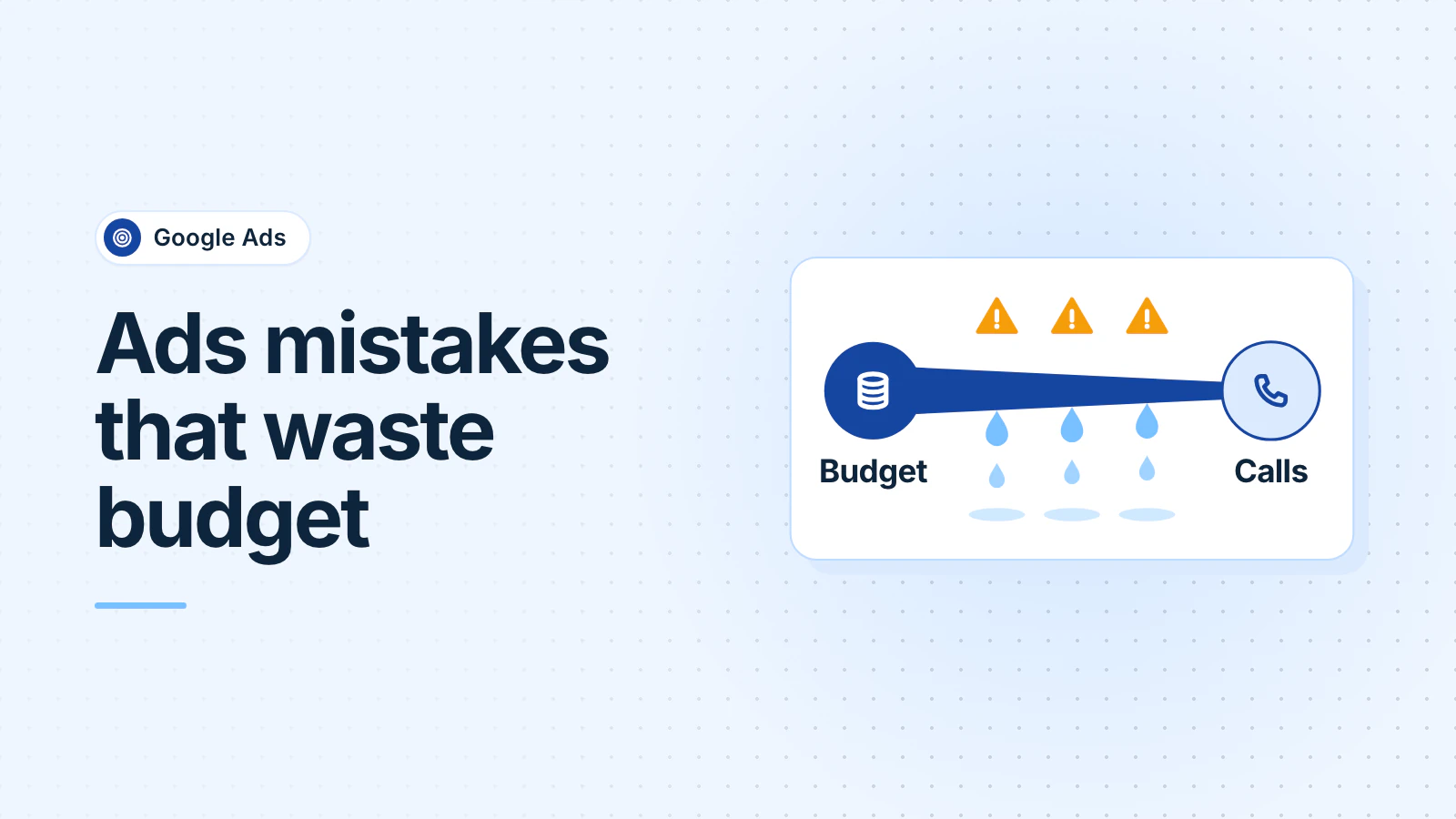
- AI Max upgrades. Google says that from September 2026, Search campaigns using automatically created assets or the campaign-level broad match setting are upgraded to AI Max, its AI layer for Search. Upgraded campaigns have search term matching on, which can show your ads on searches beyond your keywords. Dynamic Search Ads follow from February 2027 (Google, updated June 2026). Read the search terms report after an upgrade, and see our Google Ads mistakes guide for AI Max guardrails.
- Ads in AI Overviews. In the US, Search ads can show above, below or inside Google's AI Overviews. You can't opt out, and Google doesn't report the inside placements separately. Google shows no ads inside AI Overviews for healthcare and other sensitive topics, so a medical practice's ads can appear only above or below them (Google Ads Help).
The formula stays the same. Judge the budget on cost per job, not clicks.
Frequently asked questions
Is Google Ads worth it for a small business?
It is when the ad cost per job stays well below the gross profit per job, measured over a few months with calls and forms tracked. If your budget buys only a few leads a month, narrow the campaign first, or compare a pay-per-lead option such as Local Services Ads.
Should I spend more in my busy season?
Often, yes, if your crews can take on the work. Run the numbers for busy and slow months separately, because lead costs and close rates change. If you raise the daily budget mid-month, Google paces the rest of the month to the new amount.
Updated .